Swaps
Trade work for work
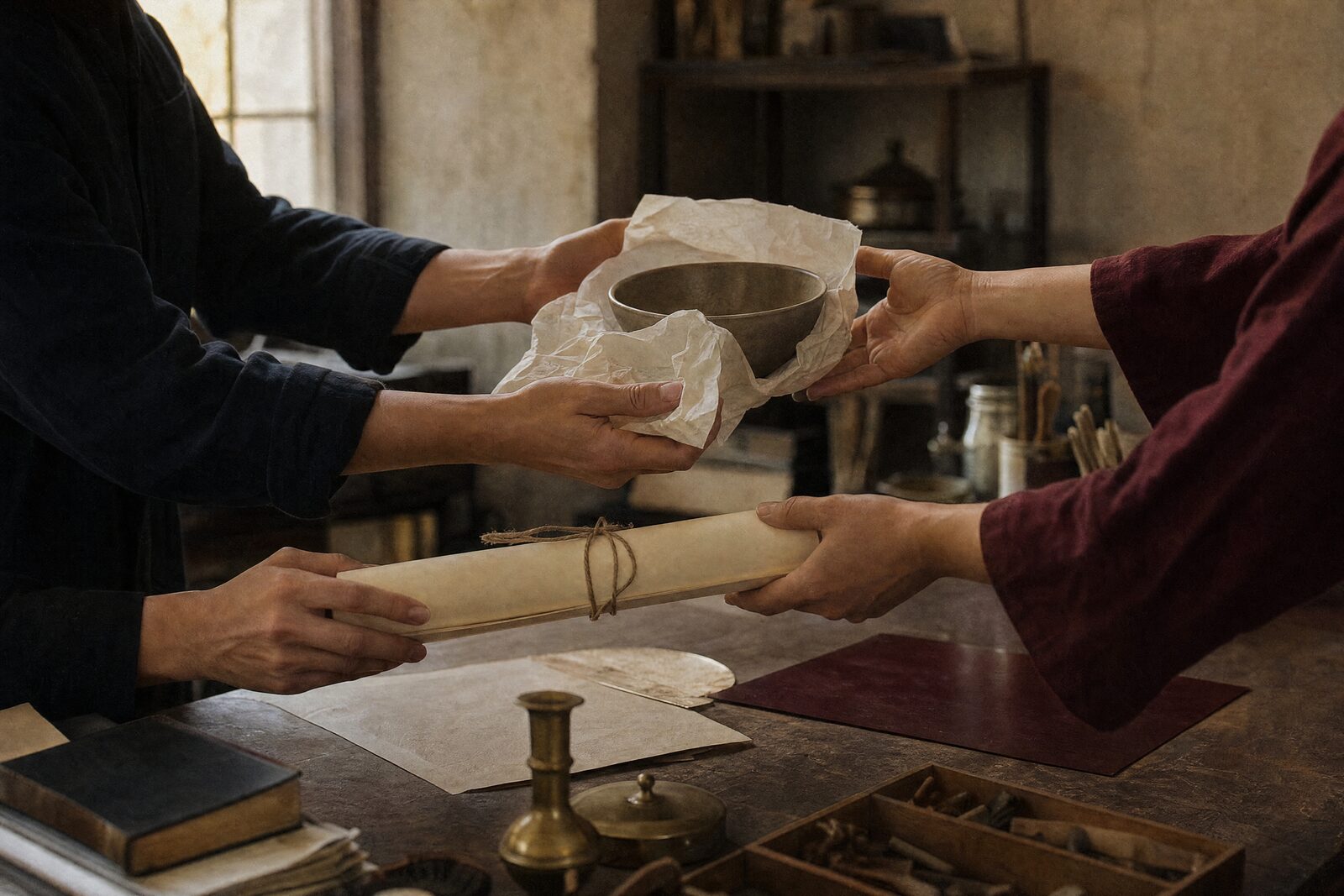
A logo for a ceramic set. A mix for a music video. A day of assisting for a day of assisting. Both sides write down what they are giving and when, both sides agree, and only then does anything ship.
Why they go wrong elsewhere
The problem with a favour is that nobody wrote it down
Everyone who has swapped work has the same story. It was going to be a quick logo. It became four rounds and a website, against a set of bowls that turned up eventually, and now two people avoid each other at openings.
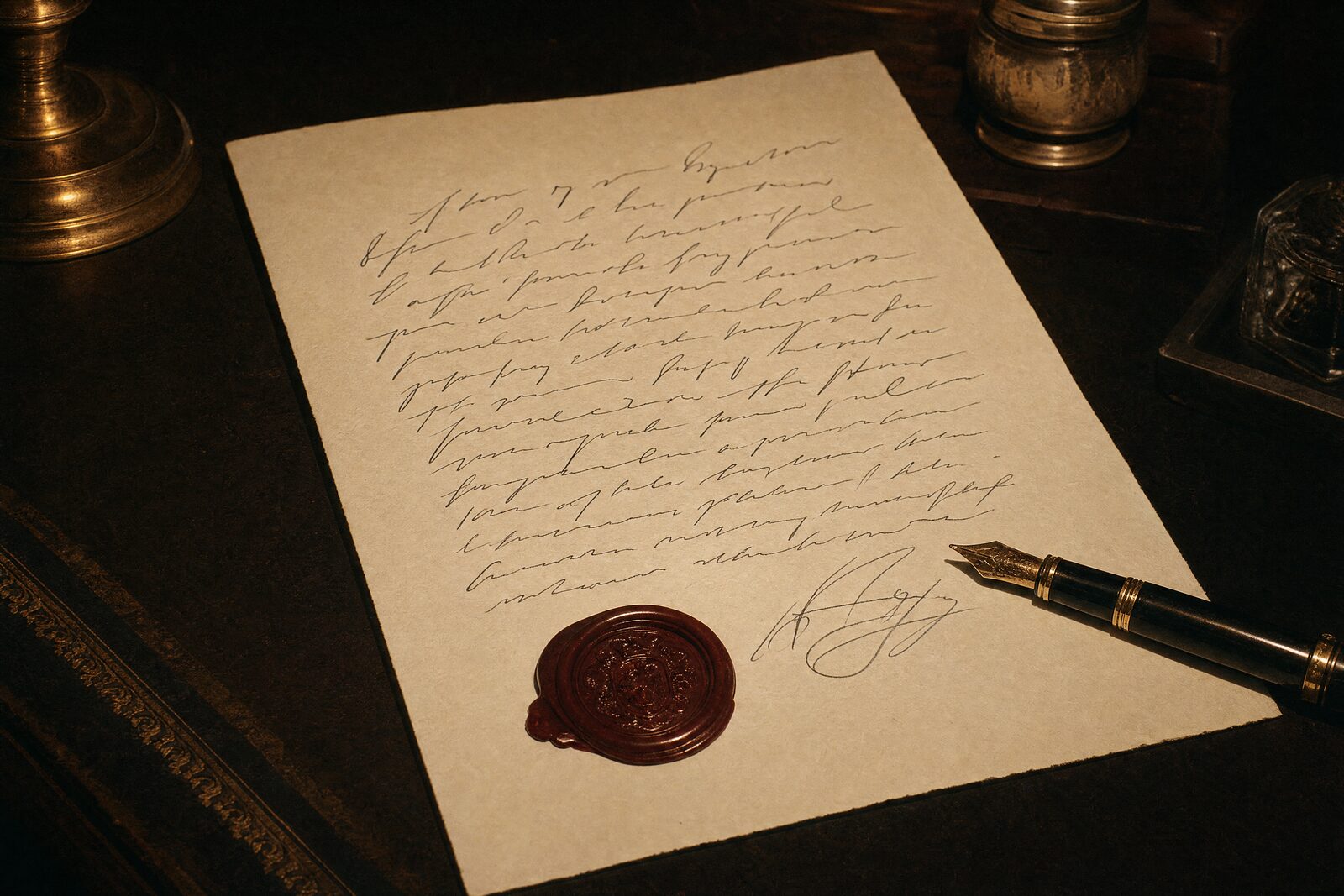
A swap here is a small written agreement. Each side writes its own half in its own words — the thing, the scope, the number of revisions, the date. Neither side can mark anything delivered until both have agreed to both halves, and both read the same page.
How a swap is agreed
Four steps, and nothing ships before step three
-
One side proposes
What you will give, and — if you know — what you would like back, the scope and the date. It goes to one member, from their page, not to a board. -
The other side writes their half, or says no
They write or rewrite what they will give, or decline with one press. Rewriting either half clears both agreements, because the pair is now different words. -
Both agree, and it holds
When the second agreement lands, the swap is agreed. From then on neither half can be rewritten, by either of you. -
You each mark yours delivered
The swap is complete when both halves are marked delivered. Until then it stays open on the list of whoever still owes theirs.
What gets swapped
Things people trade that never make it onto an invoice
Design for objects
An identity, a poster or a label, against a set of plates, a chair or a print run.
Sound for pictures
A score or a mix, against a video, a set of portraits or a poster.
Documentation
Proper photographs of somebody's work, against a piece of the work.
Space and machines
Press time, kiln space, a spare room during a fair, against hours of help.
Hands for hands
A day of assisting for a day of assisting. Two makers, two installs, no money.
Teaching
An afternoon of showing somebody how, against an afternoon of being shown.
Read moreMoney
A swap has no money in it, and we take nothing from one
Phyrne's 8% is a cut of money that moves. No money moves in a swap, so there is no cut, no fee and no reason for us to be involved beyond keeping the agreed words somewhere neither of you can quietly change them.
If you want money in it, that is a commission — put it on your storefront and take the payment properly, with the protection that comes with it.
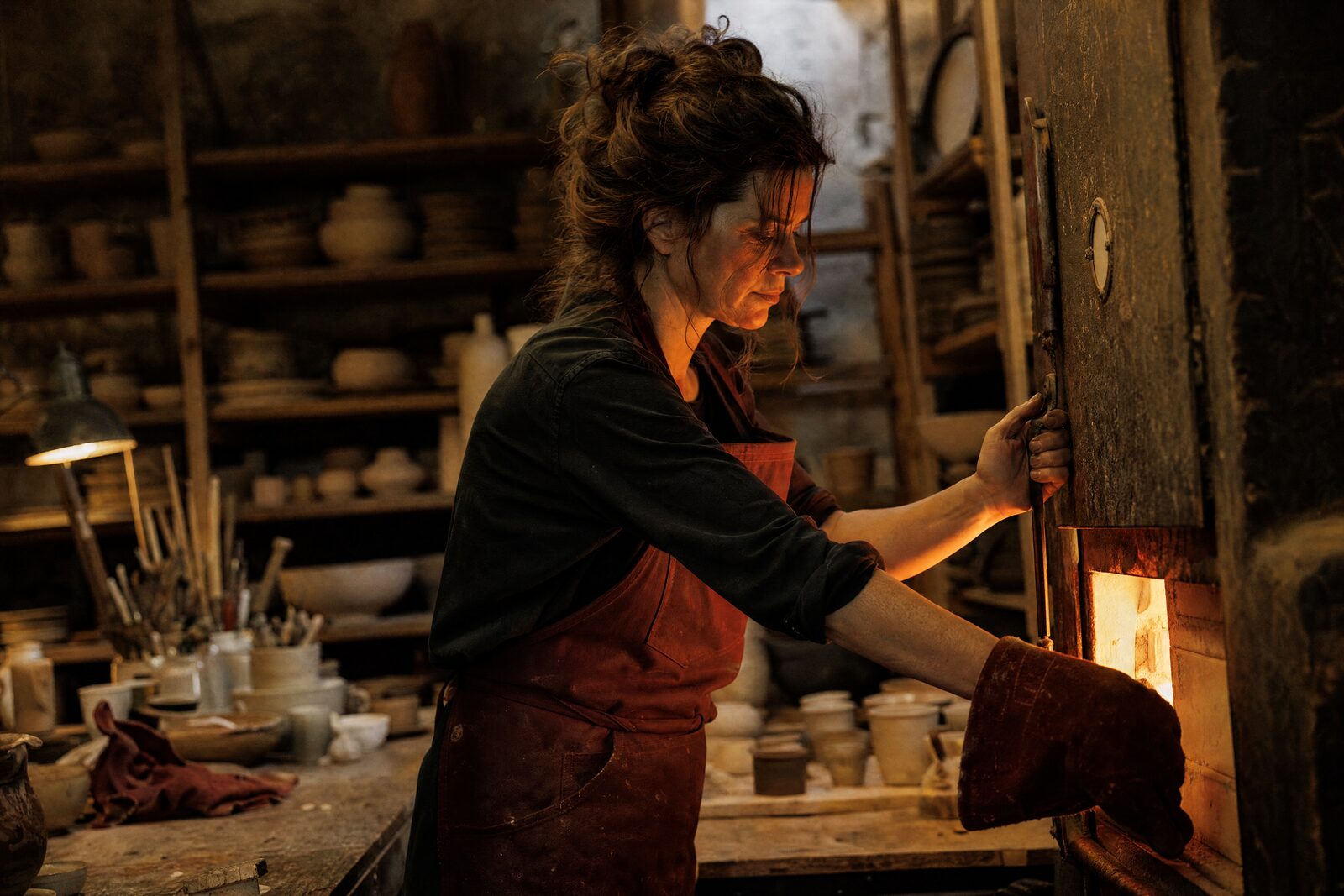
I traded a set of six tumblers for photographs of my whole studio. Both of us would have quoted the other out of the room, and both of us got exactly what we needed. The written half is why it did not drift.

Questions about swaps
What if somebody does not deliver their half?
Can a swap be part money, part work?
Does Phyrne take a cut?
Who owns what afterwards?
Propose one, in writing, this week
The written half takes five minutes and saves the friendship. Both sides agree before anything ships.